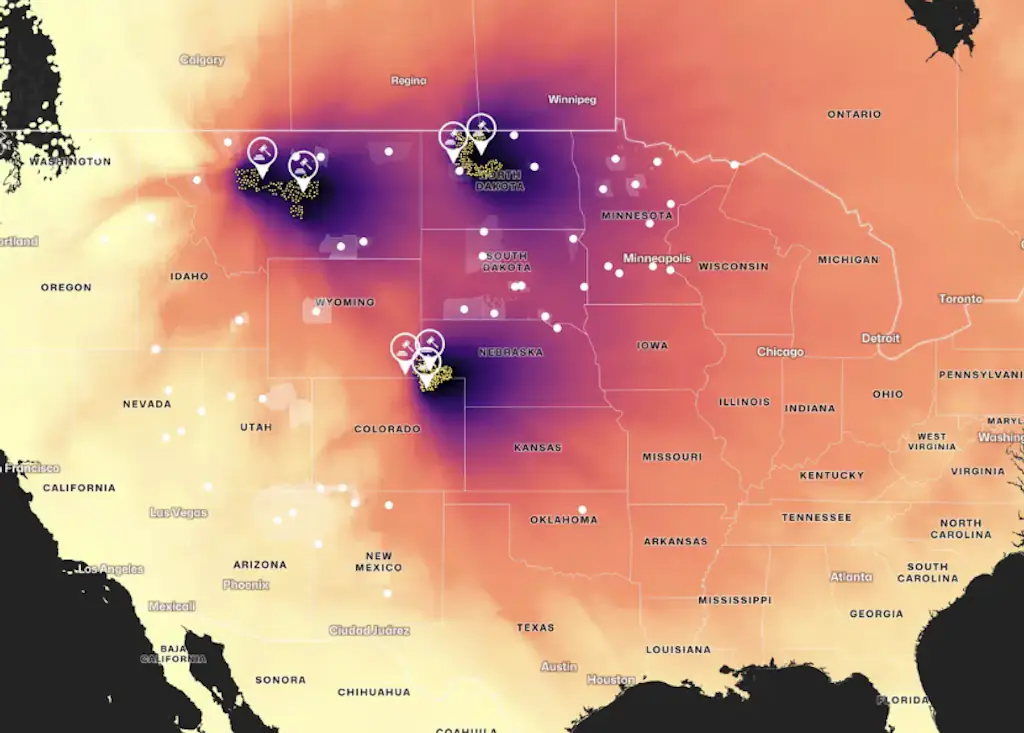
A chilling look at a potential World War III scenario highlights how survival in a nuclear conflict could come down to one thing: where you are.
If global tensions were to spiral into another world war, being in a neutral, remote country might improve your chances, but that wouldn’t guarantee safety if nuclear weapons were involved. In that case, survival would likely depend on being in a specially built bunker or far enough from blast zones to avoid radiation and still grow food afterwards.
Although recent US and Israeli strikes on Iran, and Iran’s retaliation, have raised concerns, a full-scale global war has not materialised. Iran does not possess nuclear weapons, and the US is not currently fighting a nuclear-armed nation. Still, tensions remain high across major nations.
The eight states most in danger of nuclear impact
Experts have also warned that, in a nuclear dispute, some parts of the US would face greater danger than others.
Analysis highlighted eight states, Montana, Wyoming, Colorado, Nebraska, South Dakota, North Dakota, Iowa, and Minnesota, as particularly at risk because of their proximity to missile silo sites.
In such a scenario, those locations would likely be primary targets, since destroying them would prevent retaliation.
How a nuclear fallout map may look if the US is attacked. Credit: The Brown Institute - Columbia University.
Even so, the outlook remains grim everywhere. Specialists cautioned that “nowhere is truly safe,” as nuclear weapons could also be aimed at infrastructure and major population centres.
Simulations suggest coastal areas might initially face less radiation exposure if missile silos were targeted. However, shifting winds would eventually spread fallout across much of North America.
What do the experts say?
John Erath from the Center for Arms Control and Non-Proliferation explained: “While those who live near military facilities, ICBM silos in the Midwest or submarine bases along the coasts might bear the most immediate and severe consequences of a nuclear attack, there's no question: ANY nuclear war or weapons detonation would be bad for everyone.”
He added: “Nowhere is truly 'safe' from fallout and other consequences like contamination of food and water supplies and prolonged radiation exposure.”
Similarly, Christian G. Appy warned that even a limited nuclear conflict could be catastrophic, saying it “would kill all or nearly all of those who survived the blast, firestorms, and radiation of the war” due to the effects of nuclear winter.
Ultimately, experts agree that survival would be extremely unlikely on a large scale. Even those who avoided the initial explosions could still face potentially deadly consequences from radiation exposure, famine, and environmental collapse.
Featured Image. Credit: The Brown Institute - Columbia University.