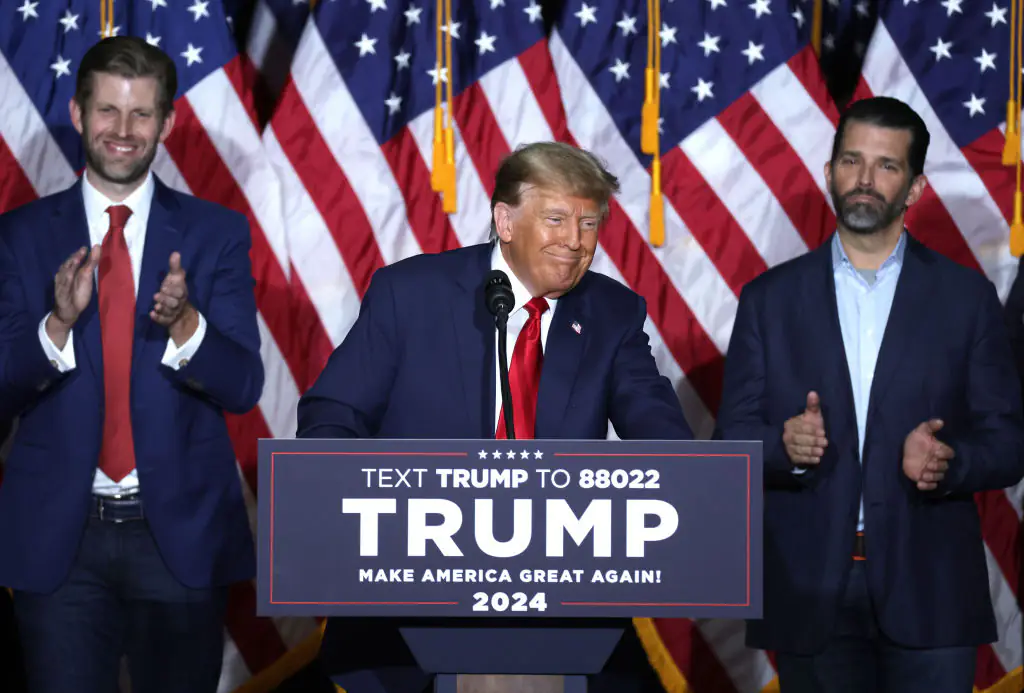
President Donald Trump has, not for the first time, ruffled the feathers of millions around the world.
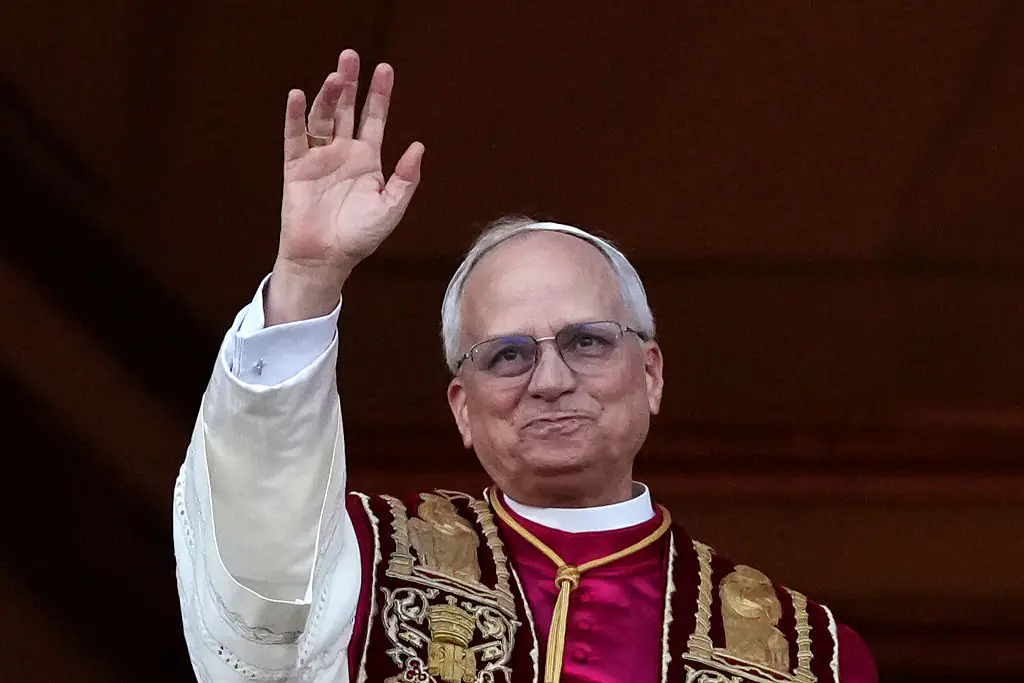
The US leader has openly feuded with world leaders in the past, but the 79-year-old has taken it to new heights in the past week or so, by calling the leader of the Catholic Church "weak".
Trump posted a long-form social media message aimed at Pope Leo XIV, claiming that he is "terrible on foreign policy," and that he prefers his brother due to his support of MAGA, among other claims.
It's been reported that the President and the Pope fell out months ago, after a meeting between a Catholic official and the Pentagon did not go to plan.
Recently, it's been claimed that US-born Pope Leo, real name Robert Francis Prevost, may not be visiting his homeland at all while the Trump Administration is in office.
Trump didn't react well when the Pope indirectly spoke about him in his Palm Sunday address in Rome, claiming that God doesn't hear prayers from world leaders with “hands full of blood”, when speaking about the US-Israel war on Iran.
A psychologist has explained why Trump has chosen to have a war of words with the Pope. Credit: Christopher Furlong/Getty Images
Donald Trump's attack on Pope Leo
Trump took to Truth Social after the Pope's candid speech, where he highlighted the “idolatry of self” and “delusion of omnipotence” when it came to the Middle Eastern war.
The US leader wrote: "Pope Leo is WEAK on Crime, and terrible for Foreign Policy.
"He talks about 'fear' of the Trump Administration, but doesn’t mention the FEAR that the Catholic Church, and all other Christian Organizations, had during COVID when they were arresting priests, ministers, and everybody else, for holding Church Services, even when going outside, and being ten and even twenty feet apart."
He said that he didn't want a Pope who advocated for Iran to have a nuclear weapon, or one "who thinks it’s terrible that America attacked Venezuela," claiming they are a nation who sends "massive amounts of Drugs into the United States and, even worse, emptying their prisons, including murderers, drug dealers, and killers."
Trump then claimed: “And I don’t want a Pope who criticizes the President of the United States because I’m doing exactly what I was elected, IN A LANDSLIDE, to do, setting Record Low Numbers in Crime, and creating the Greatest Stock Market in History."
He then said that Leo wouldn't be Pope if he weren't President, claiming he should "use common sense" and "focus on being a Great Pope, not a politician."
Trump then caused more controversy by posting an AI-generated image of him as Jesus, which he has since deleted and claimed that he was simply a "doctor".
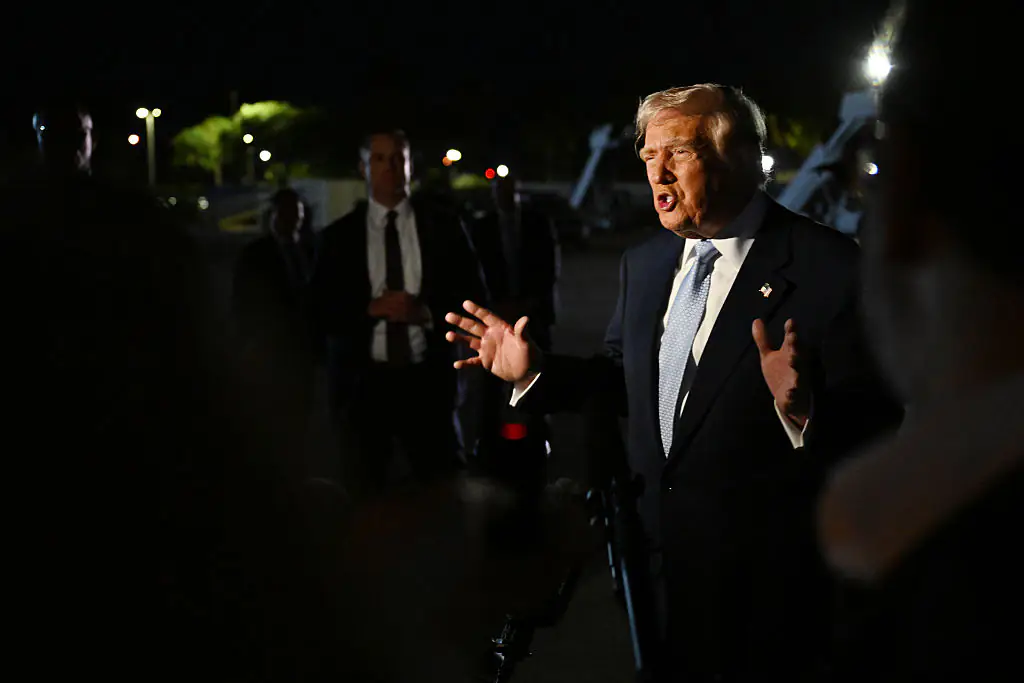
Donald Trump's message was apparently sent out to invoke a reaction from the public. Credit: Alex Wong / Getty
A psychologist's take on Trump's claims
Chartered Psychologist Dr. Darren O'Reilly dissected the President's words in a piece for The Mirror US, and he claimed that the message isn't about the Pope at all.
He explained: “This is not really about the Pope. It is about power, attention, and staying at the centre of the conversation."
The psychologist said that his pattern is similar to a communication style which is used to bring on fast, emotional reactions, instead of actual debate.
He added that the "public criticism of figures like the Pope is rarely just about the person. It is about grabbing attention and rallying support."
“Aiming criticism at religious figures tends to amplify reactions because religion is tied to identity, values, and moral authority. It feels personal to people,” Dr. O'Reilly pointed out.
He said that there is an "instant emotional divide," meaning that people must take sides.
Dr. O'Reilly explained that the President's use of words such as "terrible" and "weak" is dismissive, which can water down complex issues to "simple judgments, which makes the message more shareable but also more polarising.”
While this language creates dominance, there is no nuance - the doctor then moved on to the AI-generated image, acknowledging that this is a different case.
Trump's style of communication is no accident, according to the psychologist. Credit: Roberto Schmidt / Getty
Trump's behavior is becoming normalised
"It blurs the line between politics, identity, and performance. When politics borrows from religious imagery, it becomes less about argument and more about impact. It is designed to shock and stay in people’s minds,” Dr. O'Reilly claimed.
"It is to be seen and reacted to. Images like this work because they are unusual and slightly unsettling. People may criticise them, but they still engage with them, which increases their reach," he pointed out.
The doctor explained: "When standard criticism stops getting attention, the messaging becomes more extreme or surreal to keep people engaged.
"The stronger the reaction, the more visibility it gets, and the more likely it is to be repeated.”
The psychologist then warned of this form of communication becoming "standard," even if it is extreme, as this style is repeated enough to the point where supporters can defend or justify it, or critics can fight it - either way, it creates visibility and the story stays around for longer.
Featured image credit: Leon Neal / Getty









.jpg_xKEaT0?tr=cr-0.328.2730.3058,f-webp,q-70,w-100)