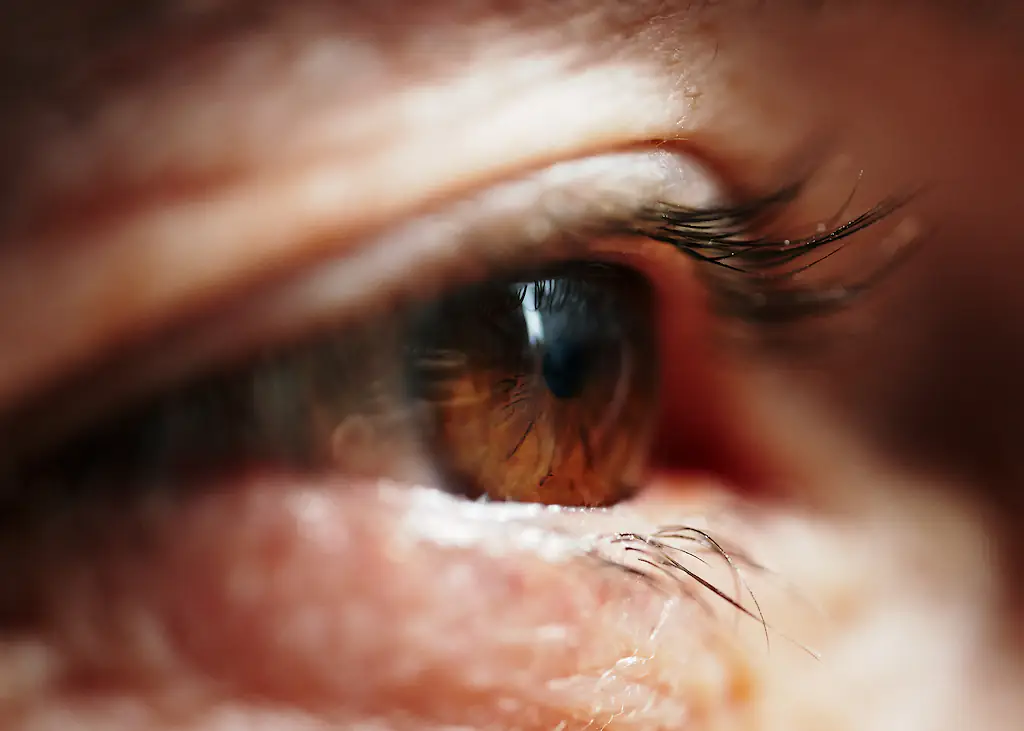
For people who live with eye floaters, they can be an annoying inconvenience - but when should you be concerned about the condition?
According to the Mayo Clinic, eye floaters are spots in your vision that may look like black or gray specks, strings, or cobwebs, which can move around as you move your eye.
And while most of the time they're harmless, there's one particular instance in which people are urged to go and see a doctor a soon as possible.
While the odd floater is pretty normal, if you wake up one morning with loads more than normal, you need to get yourself checked urgently.
Eye floaters are usually harmless. Credit: Gary Yeowell/Getty Images
When should you seek medical attention for floaters in the eye?
The Mayo Clinic warns: "If you notice a sudden increase in eye floaters, contact an eye specialist immediately — especially if you also see light flashes or lose your vision. These can be symptoms of an emergency that requires prompt attention."
It adds that people should seek medical attention if they notice lots more floaters than usual, which arrive suddenly, flashes of light in the same eye as the floaters, darkness at the sides of your vision - also known as peripheral vision loss, as well as a grey curtain or blurry area that blocks part of your vision.
These symptoms, which are painless, can be caused by a retinal tear which can happen with or without a retinal detachment.
This is a sight-threatening condition that requires immediate treatment to try and help save the vision.
Floaters can look like small strings within your vision. Credit: RUSLANAS BARANAUSKAS/SCIENCE PHOTO LIBRARY/Getty Images
If you are concerned about floaters in your vision, an eye doctor can help to determine the cause and any possible treatment.
Conditions such as diabetes can cause floaters due to bleeding and inflammation, and treating the medical condition can often help improve the floaters, too.
While most people can learn to live with floaters, if they affect the vision there are sometimes options such as surgery to remove the vitreous or a laser to disrupt the floaters, though this is rarely done.
What are floaters in the eye caused by?
According to the Cleveland Clinic, floaters occur when the vitreous humor (fluid) in the eye changes its thickness, causing the appearance of squiggly lines or threads in the field of vision.
The floaters themselves are solidified pieces of the vitreous which move around in the vitreous and appear similar to bits of dust stuck on a camera lens. They can not be blinked away and move with the eye as you look around.
When the floaters move past the macula (the center of the retina), a shadow is cast within the eye, becoming the image of the 'floater' that you see.
Any sudden or severe changes should be looked at by an eye doctor. Credit: Maskot/Getty Images
Floaters often happen when a person gets older and may not need any treatment.
The medical name for them is myodesopsias and they are most commonly seen when looking at a clear sky or a blank piece of paper, or wall.
Featured image credit: Gary Yeowell/Getty Images










.webp_lli6Ty?tr=cr-74.9.445.380,f-webp,q-70,w-100)